The Amalfi Coast is one of those places that photographs so beautifully it's hard to know where to start planning.
You save 400 Pinterest pins and follow every dreamy travel account. Then you realize you have no idea how to get to Positano from the airport, whether to stay in Amalfi or a smaller town, or what to do when the ferries stop running.
This guide covers everything to know before your first trip: the seasons, a town-by-town breakdown, how to get around without a car, and the real-life logistics that don't make it onto the Pinterest boards.
It's written for the girl who's been planning this trip in her notes app for three years and is finally ready to book. If that's you, you're in the right place ;)
Deciding between Italy and Greece? The first-time Greek Islands guide follows the same format.
When should you go to the Amalfi Coast?
Peak season is June through August. It's also the most crowded, most expensive, and most humid time to go.
Go in May, early June, or September.
The water is swimmable, the sun is still hot, the crowds are much thinner, and prices drop noticeably.
Late September into early October is magical.
The sea is still warm from summer, the light gets softer, and you can finally get a table at the restaurants you saved. By mid-October, swimming gets chilly and some hotels start closing for the season. April and early May are lovely too, but the water is still cold.
Avoid mid-August if you can.
Around Ferragosto (August 15), much of Italy goes on vacation and the coast gets packed. If August is your only option, book everything at least three months out and plan for crowds.
How do you get to the Amalfi Coast?
There's no airport on the Amalfi Coast itself, so here are your options.
Fly into Naples (NAP).
The closest major airport, about 90 minutes from Positano by car, and the choice for most first-timers. From Naples, you can book a private transfer (often around €150 to €250), take the train to Sorrento and then a bus or ferry, or take the SITA bus (the cheapest option, but slow and winding).
Fly into Rome (FCO or CIA).
Plan on three to four hours by car, or a train plus a transfer. It's only worth it if flights are much cheaper, or if you're adding a few days in Rome.
Book a private transfer for your first trip.
The road from Naples to the Amalfi Coast is one of the most winding in Europe. Letting someone else drive is one of the best pre-arrival decisions you can make. Book through your hotel or a service like Welcome Pickups or Daytrip.
Take ferries between towns.
Ferries run roughly April through October and are the best way to get around once you're on the coast: cheaper than taxis, faster than the bus, and far more scenic. Outside ferry season, you'll rely on the SITA bus or private cars.
Which Amalfi Coast town should you stay in?
Positano
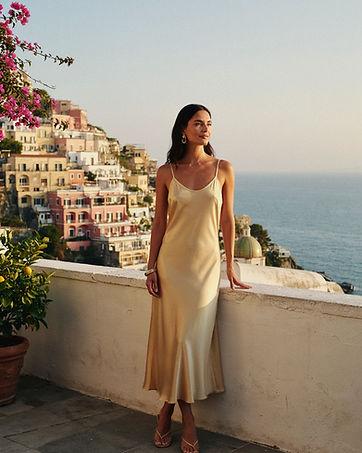
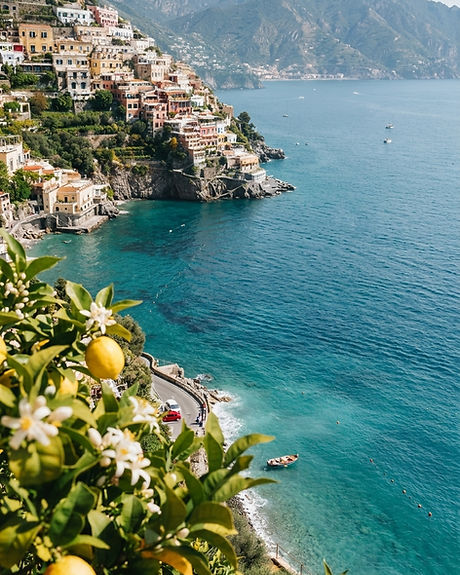
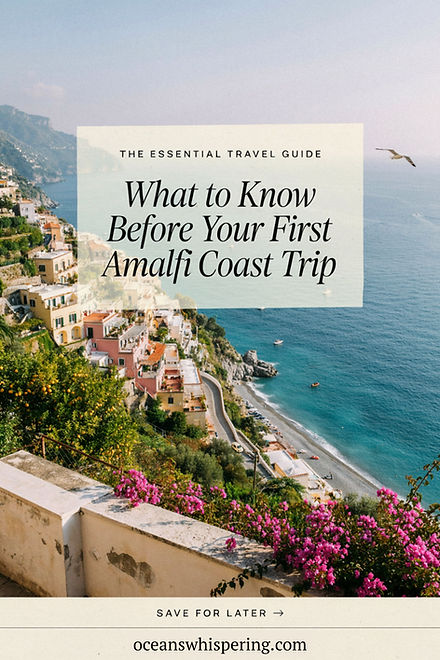
The famous town on everyone's travel list. Vertical, pastel, and dripping with bougainvillea. It's stunning, walkable if you don't mind stairs, and packed with boutiques, beach clubs, and cliffside restaurants. It's also the most expensive, crowded, and touristy town on the coast.
Best for: first-timers who want the postcard, honeymooners, and anyone whose priority is the vibe.
Not ideal for: tight budgets, anyone with mobility issues (it's steep, really steep), or travelers who want a quieter, local feel.
Amalfi
More historic than Positano, less vertical, more residential, and noticeably more affordable. It has a real main square, a beautiful cathedral, and easy ferry access to the other towns.
Best for: travelers who want a classic Italian town with tourist convenience, better value, and a central base.
Not ideal for: anyone who booked the trip because of that one photo of Positano and won't settle for anything else.
Ravello
Perched in the hills above Amalfi and reached only by a winding road. Quiet and sophisticated, it's known for its gardens (Villa Rufolo and Villa Cimbrone) and the Ravello Festival, which runs from July to September. It's not on the water, so there are no beaches, but the views from above are unmatched.
Best for: repeat visitors, couples who want elegant quiet, and culture-focused travelers.
Not ideal for: first-timers who want the beach every day, party-goers, and families.
Praiano
Between Positano and Amalfi, quieter than either, with some of the best coastal walking. It's the local's alternative to Positano, without the crowds or the price tag.
Best for: second-time visitors, budget-conscious travelers who still want the vibe, and anyone who wants to feel more like a local.
Not ideal for: anyone who wants walkable nightlife or shopping.
Sorrento
Technically not on the Amalfi Coast, but a popular base. It's larger, flatter, more affordable, and better connected to Naples and Capri.
Best for: tight budgets, families, and day trips to Capri and Pompeii.
Not ideal for: anyone who wants to be on the Amalfi Coast itself.
The first-trip formula:
Stay in Positano for three or four nights for the full postcard experience, then move to Amalfi or Praiano for two or three nights to see another side of the coast. Split stays are much more satisfying than a single base on this coast.
Where should you stay?
The bucket-list hotel
Le Sirenuse or Il San Pietro in Positano, Santa Caterina in Amalfi, or Belmond Hotel Caruso in Ravello. Expect well over €1,000 a night in peak season and bookings far in advance, but they're worth it if you're celebrating something enormous. Several of these are in the dream hotel edit.
The elevated boutique hotel
Casa Angelina in Praiano, Hotel Marincanto in Positano, or the NH Collection Grand Hotel Convento di Amalfi, set in a restored 12th-century monastery above Amalfi town. Often around €400 to €800 a night, still a real experience, and easier to book.
The stylish mid-range
Family-run boutique hotels and guesthouses, often around €200 to €400 a night. This is where most first-timers stay, and where you'll find the best value for the vibe. Mr & Mrs Smith and Tablet Hotels (now the Michelin Guide's hotel selection) both have curated picks.
Vacation rentals
Rentals work well on the Amalfi Coast, especially in Praiano and Amalfi town. Book anything with a terrace, and skip anything without air conditioning.
What should you do on the Amalfi Coast?
Take a boat day.
Rent a small private boat or join a small-group tour for a full day on the water. This is the Amalfi Coast experience: swimming off the boat, lunch at a coastal cove, and seeing Positano from the sea. Budget around €300 to €600 for a private boat, and less for a group tour. Pack a quick-dry Turkish towel for the swims.
Go to Capri, but stay past 4 p.m.
Most day-trippers leave Capri by mid-afternoon. Once they do, the island turns quiet, golden, and walkable. If you can stay overnight, do. If not, take the last ferry back.
Hike the Path of the Gods.
A two- to three-hour walk along the cliffs from Bomerano to Nocelle, high above Positano. It's one of the most beautiful walks in Europe, so start early to beat the heat.
Have one long, slow lunch at a coastal restaurant.
Da Adolfo in Positano is the classic, reached by its own little boat, so book weeks ahead. For more long-lunch spots, try Il Ritrovo in Montepertuso, high above Positano, or Da Gemma in Amalfi.
Visit Ravello for a day, even if you're not staying there.
The gardens at Villa Rufolo and Villa Cimbrone are worth the winding drive up.
Skip the tourist traps.
Pass on the Blue Grotto in Capri if the line is long, restaurants with a "tourist menu" in English out front, and the main beach in Positano in July and August.

Frequently asked questions
How many days do you need on the Amalfi Coast?
Four to seven days. Three is too short once you factor in travel days. Five nights split between two towns is the sweet spot for a first trip.
Do you need a car on the Amalfi Coast?
No, and you won't want one. The road is narrow, winding, and crowded, and parking is nearly impossible in peak season. At peak times (Easter week, summer weekends, and all of August), non-residents' cars can only drive the coast road on alternate days, depending on whether their license plate ends in an odd or even number. Ferries, the SITA bus, and private transfers cover everything.
What should I pack for the Amalfi Coast?
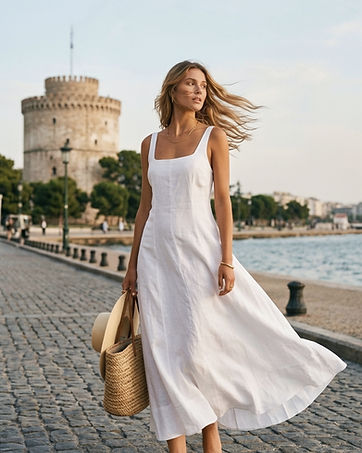
Linen dresses, flat leather sandals (the stairs are real), a straw tote, swimwear, one elevated dinner dress, and a lightweight linen wrap for cooler evenings. Pack lighter than you think. The Euro trip sundress edit and the Mediterranean dinner dresses edit cover day and night.
Is the Amalfi Coast expensive?
Yes, especially Positano in peak season. Budget around €200 to €400 per person per day for a mid-range trip, and more for the iconic hotels. Shoulder season costs noticeably less.
When is the best time to visit the Amalfi Coast?
Late May, early June, or September. The water is warm, the crowds are thinner, and the light is softer. Avoid August if you can.
Is the Amalfi Coast safe for solo female travelers?
Yes, but take the usual precautions. It's generally very safe and popular with solo travelers. Watch for pickpockets in crowded spots, don't leave valuables on the beach, and take care on narrow roads at night.
The Amalfi Coast rewards planning. Book flights early, book hotels even earlier, reserve your favorite restaurants before you land, and pack for the trip you want to have.
The girls who look the most effortless on the coast spent months dreaming about it before they arrived, and now you're one of them ;)