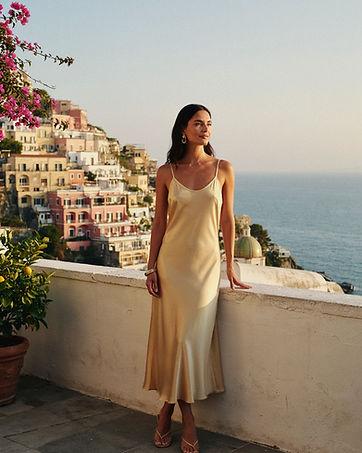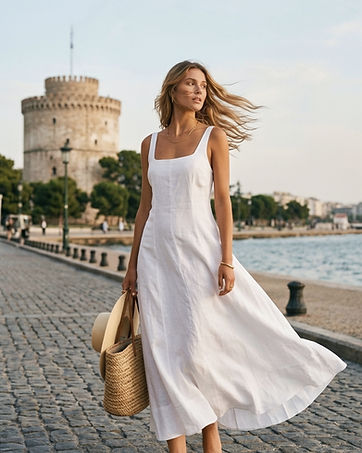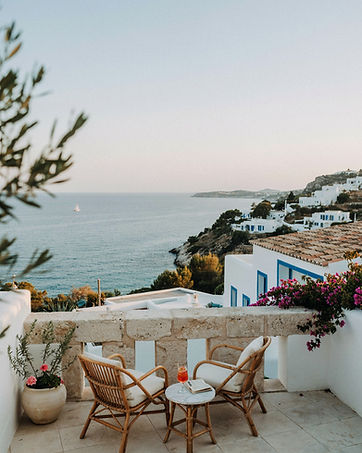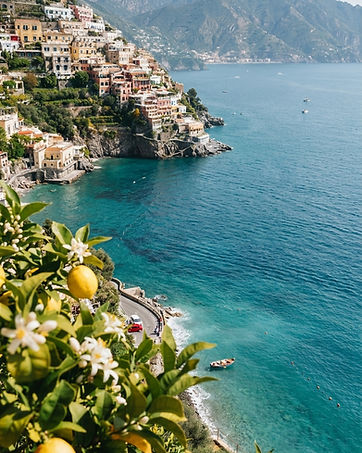

The Greek Islands are one of those trips that lives in your imagination for years before you book it. Whitewashed buildings against impossibly blue water, sunset dinners at cliffside tavernas, and a boat day that stretches into a five-hour lunch.
You save the pins and follow the accounts of women in cream halter dresses walking the streets of Mykonos. Then you realize there are more than 200 inhabited Greek islands, and you have no idea which ones to choose.
This guide covers everything to know before your first trip: how to pick your islands, when to go, how to island-hop without losing whole days to ferries, what to pack, and the planning realities that don't make it onto the Pinterest boards.
If you've been curating this trip in your head since college and you're finally ready to make it happen, you're in the right place.
Which Greek Islands should you visit?
This is the biggest decision, and it's where most first-timers get overwhelmed. You're going to visit two, maybe three islands. Here's how the best options for a first trip compare.
Mykonos
The famous one we've all saved to our bucket list. Whitewashed buildings, beach clubs, and a nightlife scene that starts at 4 p.m. and ends at 4 a.m. Mykonos is stunning, walkable, and packed with rooftop bars, boutique shopping, and some of the most photographed streets in the world.
Best for: first-timers who want the postcard, girls' trips, bachelorettes, and anyone whose priority is the vibe and the party.
Not ideal for: quiet-seeking travelers, tight budgets (Mykonos is on the pricier side), and anyone who thinks "beach club" sounds exhausting.
Santorini
The island you've seen on every Instagram feed. Caldera views, cliffside villages (Oia and Fira), and some of the most famous sunsets in the world. It's iconic and worth seeing at least once, and it's also one of the busiest and most expensive islands.
Best for: honeymooners, milestone trips, and anyone chasing the classic postcard.
Not ideal for: solo travelers looking for connection (Santorini is very couples-heavy), tight budgets, or beach lovers (Santorini's beaches are volcanic, not the classic soft-sand fantasy).
Paros
The best-kept secret that isn't a secret anymore. Paros has the whitewashed-village charm of Mykonos, the beaches of the smaller islands, and a food scene that's quietly one of the best in Greece. Naoussa, a fishing village turned foodie destination, is the highlight.
Best for: second-time Greece visitors, travelers who want a balance of the classic aesthetic and a slower pace, and food-focused trips.
Not ideal for: short trips where you want the most iconic photos.
Milos
The under-the-radar pick with some of the most dramatic beaches in Greece. Sarakiniko looks like the surface of the moon, and Kleftiko is best reached by boat (worth every minute of the ride). Milos is quieter, more rustic, and less developed than Mykonos or Santorini.
Best for: travelers who put swimming spots and nature ahead of nightlife, photographers, and second-time visitors.
Not ideal for: anyone who wants shopping, a party scene, or lots of restaurants to choose from.
Crete
The largest Greek island, and practically a country of its own. Ancient ruins, mountain villages, beach towns, hiking trails, food, and history. Crete is what you visit if you want a full week that never feels repetitive.
Best for: travelers with a full week who want variety, history buffs, food lovers, and families.
Not ideal for: quick trips (Crete needs at least five to seven days).
Corfu
The Ionian Sea alternative: greener, more Italian-influenced (it was once Venetian), and less white-and-blue than the Cyclades. The beaches are gorgeous, and it's easier to reach than the more remote islands.
Best for: travelers combining Italy and Greece, those who want lush landscapes over whitewashed villages, and couples.
Not ideal for: anyone chasing the classic Greek Islands look (Corfu doesn't look like the Pinterest boards).
Naxos, Sifnos, Amorgos, and Folegandros
The next-tier options, each with its own reason to visit: Naxos for beaches and family-friendly vibes, Sifnos for food, Amorgos for hiking and remoteness, and Folegandros for a stunning tiny cliffside village that flies under the radar. All are great for a longer or more off-the-beaten-path trip.
The first-trip formula:
Mykonos plus Santorini plus Paros or Milos. You get the iconic sunsets (Santorini), the beach club energy (Mykonos), and one calmer, more local island as a contrast. Plan on seven to ten days in total.
When should you go to the Greek Islands?
Peak season is June through August. It's also the most crowded, hottest, most expensive, and most sold-out time to go.
Go in late May, early June, or September.
The water is swimmable, the sun is still hot, the crowds are lighter, and prices drop. Late September is the sweet spot: the sea is still warm from summer, most restaurants are still open, and the light gets softer as the season shifts.
Avoid August if you can.
It's when much of Europe takes vacation. Restaurants need reservations weeks out, popular ferries sell out days ahead, and the heat can top 100°F on some islands. If August is your only option, book everything at least three months out.
Skip winter.
Most islands go quiet from November through March. Restaurants close, ferries run reduced schedules, and many hotels shut for the season. Athens is lovely year-round, but the islands are a summer destination.
How do you get to the Greek Islands?
Almost every trip starts in Athens. From there, you have two options.
Fly to your first island.
This is the fastest option. Mykonos and Santorini both have airports, with frequent flights from Athens that take about 40 to 50 minutes. Flying costs more than the ferry but saves hours of transit.
Take the ferry from Athens.
Slower, but part of the experience. From Piraeus, high-speed ferries reach Mykonos in around three hours and Santorini in around five. Conventional ferries take longer but cost less. Ferryhopper and Direct Ferries both show every operator in one place.
The best first-time strategy
Fly into Athens and spend one or two nights seeing the Acropolis and the Plaka neighborhood. Then fly to your first island and take ferries between islands from there. End the trip by ferrying back to Athens, or by flying home from Mykonos or Santorini (both have some direct international flights in peak season).
How do you island-hop?
Ferries connect every major island, run often in peak season, and are the most affordable way to get around.
Buy ferry tickets ahead in peak season.
Popular routes (especially Mykonos to Santorini) can sell out days in advance in July and August. Ferryhopper is the easiest platform to use.
Choose high-speed or conventional.
High-speed ferries are faster and pricier. Conventional ferries are slower, cheaper, and often more scenic. For trips under two hours, take whichever is convenient. For longer routes, the high-speed ferry is usually worth the extra euros.
Pack for the ports.
You'll be moving your bags on and off boats, sometimes across a windy port with wheels dragging over cobblestones. Pack lighter than you think, and bring a soft-sided bag or a suitcase with good wheels.
Small planes do fly between some islands, but they're limited and pricey. Skip them unless you need to save time on one specific leg.
What's the best way to see the Greek Islands?
The best way to see the Greek Islands on a first trip is simple: choose one island group, stay at least three nights on each island, and travel between them by ferry.
Stay within one island group.
Greece's islands come in groups. The Cyclades (Mykonos, Santorini, Paros, Naxos, and Milos) are linked by frequent ferries, so hopping between them is easy. Mixing groups, like the Cyclades with Corfu in the Ionian Sea, usually means flying back through Athens and losing a day.
Give each island at least three nights.
Arrival and departure days eat into your time on every island. Three nights gives you two full days to swim, explore, and linger over lunch before you pack again.
See the coast from the water.
Some of the most beautiful spots, like Kleftiko on Milos, are easiest to reach by boat. One boat day shows you a side of the islands you can't see from land.
How many islands should you visit?
Five to seven days: two islands at most. Any more and you'll spend more time in transit than exploring.
Seven to ten days: three islands. This is the sweet spot for a first trip: enough variety to see different sides of Greece, without constantly packing and unpacking.
Ten to fourteen days: three or four islands, or three islands plus Athens or Crete.
More than two weeks: consider basing yourself on one big island (Crete or Naxos) and taking day trips, or split the time between two islands with five or six nights each.
The number one first-timer mistake
Trying to see too many islands. Four islands in seven days turns into a ferry marathon instead of a vacation. Fewer islands means more time on each, and a better trip.
Where should you stay?
Here's a guide to stays by the kind of Greek vacation you're dreaming of. (For more dreamy picks, see the best Mediterranean hotels to save on Pinterest.)
The bucket-list hotel
Katikies and Perivolas in Oia (Santorini), and Cavo Tagoo or Nammos Hotel Mykonos (Mykonos). These are iconic, often well over €1,000 a night in peak season, and they book up many months out.
The elevated boutique hotel
Cocoon Suites (Santorini), Semeli (Mykonos), Parilio (Paros), and Skinopi Lodge (Milos). Around €400 to €800 a night, still a real experience, and easier to book.
The stylish mid-range
Family-run boutique hotels and guesthouses, often around €150 to €350 a night. This is where most first-timers stay, and where the best value lives. Mr & Mrs Smith, Small Luxury Hotels, and Tablet Hotels (now the Michelin Guide's hotel selection) all have curated picks.
Vacation rentals
Rentals work well on the Greek Islands, especially outside the busiest town centers. Book anything with a view, since you'll spend most mornings on the terrace, and check reviews to confirm the air conditioning works.
What should you do on the Greek Islands?
The full list of everything you could do is exhausting. Here's the short list.
Take a boat day.
Charter a private boat or join a small-group catamaran tour for a full day on the water: swimming at hidden coves, lunch on board, and the caldera or coastline from the sea. Budget around €400 to €800 for a private boat, and less for a group tour.
Watch the sunset in Santorini, away from the main crowd.
Oia's castle viewpoint is the most famous spot, and the most packed. Arrive early and walk along the cliff to a quieter spot, or watch from Imerovigli or Firostefani instead. The sunset lives up to the hype; the crowd doesn't.
Do a beach club day in Mykonos.
Scorpios and Nammos are the famous ones, and Alemagou is the more laid-back alternative. Reserve daybeds in advance, arrive by mid-afternoon, and stay through sunset.
Have one long, slow lunch at a taverna by the water.
This is what Greek Islands travel is all about: grilled fish, a Greek salad, cold white wine, and three hours at the table.
Visit the ancient sites.
Delos, a short boat ride from Mykonos, is one of the most important archaeological sites in Greece. Akrotiri on Santorini is often called the "Pompeii of the Aegean." Even one ancient site adds real depth to the trip.
Skip the tourist traps.
Pass on restaurants with laminated English menus out front, the most crowded sunset viewpoints, and beaches that charge an entry fee unless you're getting a real beach club with beds and service.
What should you pack for a Greek Islands trip?
The Greek Islands have their own wardrobe: flowy cotton and linen for daytime, cream and pearl to glow against the whitewashed architecture, one silk slip or satin cowl dress for dinner, a sparkle piece for Mykonos nights, real leather sandals or elevated flip-flops, gold jewelry, and one great straw hat.
For the full breakdown, see the unofficial guide to dressing for a European summer. Its packing philosophy section is built for exactly this kind of trip.
For daytime dresses that look gorgeous against the whitewashed villages, see 6 must-have sundresses for your next Euro trip.
For Mykonos dinners and beach club nights, see the mermaidcore dinner lookbook.
A few practical additions the fashion posts don't cover:
- Packing cubes: a must for a multi-island trip where you'll repack every two or three days.
- A wide-brim straw hat: the islands are bright, and shade is limited on boats and beaches.
- Reef-safe mineral sunscreen: Greek beaches are stunning and unshaded, so you'll burn faster than you think.
- A European plug adapter: Greece uses Type C and Type F outlets, and your phone will die on a boat day.
- Leather sandals with grip: most island villages are stone-paved and slick when wet.
- One book set in Greece: Circe by Madeline Miller for the mythology mood, or The Island by Victoria Hislop for a Crete-set family saga.
What surprises first-time Greece travelers the most?
Ferries can be late or canceled because of wind.
The Aegean gets windy, especially in July and August, when the meltemi winds blow. Ferries sometimes get canceled with little notice, so build in a buffer day if you're flying home from an island.
The islands are more expensive than you'd think.
Especially Mykonos and Santorini. A day at a famous beach club like Scorpios can run around €200 or more per person before you eat, and dinner at a nicer restaurant is often around €80 to €150 per person with wine.
Dinner starts late.
Many restaurants don't fill up until 8 p.m. The islands run on Mediterranean hours, so plan an aperitivo to bridge the gap.
Cash is more useful than you'd expect.
Some tavernas, small beach bars, and boat operators prefer cash. ATMs are easy to find but can run low in high season.
Wifi is inconsistent.
Especially on boats and in some older hotels. Download offline maps, playlists, and your reservations before boat days.
Sunsets happen fast.
You get maybe 20 minutes of the real magic, so arrive early.
The whitewashed buildings are hotter than they look.
Bright walls in direct sun reflect the heat. Bring a hat and sunglasses, and drink more water than you think you need.
Not every corner is the Pinterest fantasy.
Ferry ports are industrial, some island interiors are dry and dusty, and the famous villages can be a 15- to 20-minute drive from where the ferry lands. Set your expectations for the transit parts.
What's the budget reality for a Greek Islands trip?
These are rough per-person, per-day ranges for peak season, before flights.
Budget trip, around €150 to €250 a day: a guesthouse or rental outside the busiest villages, a mix of tavernas and casual meals, ferries between islands, and no private boats.
Mid-range trip, around €300 to €500 a day: a boutique hotel in a good location, most meals at nicer restaurants, one boat day, one beach club day, and a mix of ferries and flights.
Luxury trip, €800 or more a day: iconic hotels, private boat days, beach club beds, tasting-menu dinners, private drivers, and short flights between islands.
Flights to Athens are on top of that and vary a lot by season. Book four to six months out for the best fares; plenty of airlines serve Athens in summer.


Frequently asked questions
Which Greek Island is best for a first trip?
Mykonos for the postcard and the party, Santorini for the caldera sunset, and Paros or Milos as a calmer third island. Seven to ten days across those three makes an ideal first trip.
What is the best way to visit the Greek Islands?
Fly into Athens, then take a short flight or ferry to your first island. From there, stay within one island group, like the Cyclades, and hop between two or three islands by ferry, with at least three nights on each.
What is the best month to visit the Greek Islands?
Late May, early June, or September. The water is warm, the crowds are lighter, and prices drop. Avoid August if you can.
Do you need a ferry pass for the Greek Islands?
Not usually. Buy individual tickets in advance through Ferryhopper or Direct Ferries, especially for popular routes like Mykonos to Santorini.
How much does a Greek Islands trip cost?
Plan on around €150 to €250 per person per day on a budget, and around €300 to €500 for a mid-range trip, before flights. Mykonos and Santorini in peak season cost more, and shoulder season costs noticeably less.
Is it safe to travel solo in the Greek Islands?
Yes, but use the same common sense you would anywhere. Greece is generally considered a safe destination, and Paros and Naxos in particular have plenty of solo-friendly hotels and easy ways to meet other travelers.
The Greek Islands reward planning. Book flights early, book ferries in advance, reserve your favorite restaurants before you land, and pack for the trip you want to have.
The girls who look the most effortless in Mykonos and Santorini spent months dreaming about it before they arrived, and now you're one of them ;)