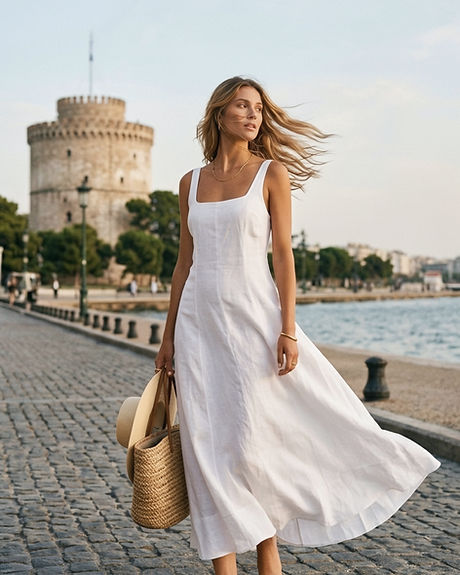
Thessaloniki isn't on most Mediterranean summer wishlists, but my best friend is there right now, and her itinerary makes a strong case for adding it to yours.
Greece's second city sits on a curve of the Thermaic Gulf in the north, with a waterfront promenade that stretches for miles, Byzantine churches tucked between cafés, and a food scene that locals will tell you (with total confidence) is the best in the country. It's close enough to reach Meteora for a day and the Aegean beaches of Chalkidiki for an afternoon, and it feels lived-in, which is its charm.
Three of the five experiences below come straight from her plans. The last two are her additions, the ones she said she'd be squeezing in if she had one more day!
Why Thessaloniki, and when to go
Thessaloniki is a magical city with quaint Greek charm. People stroll the seafront promenade at sunset, bakeries open early for bougatsa, and cafés stay full late into the night. It has Roman ruins and Ottoman markets, the White Tower on the water, and a university crowd that keeps everything lively.
When to go: late spring (May and June) and early fall (September and October) are the sweet spots, with warm days, softer crowds, and evenings made for eating outside. July and August are hot, which is perfect if you plan to spend afternoons on the Chalkidiki coast.
How long to stay: four to five days lets you enjoy the city and take two day trips without rushing.
1. A morning food tour with Chef Panos
- The experience: Thessaloniki Food Tastings and Drinks Tour with a Chef
- Duration: about 4 hours, on foot
- Group size: small, up to 8
- Price: around $93 per person
This is the first thing on her list, and it's the perfect way to start a trip. Chef Panos meets the group at the church of Saint Sophia and walks you through the city one bite at a time: a koulouri (the sesame bread ring locals eat on the go), flaky bougatsa filled with cream or cheese, marinated anchovies, and a coffee break.
Travelers who've taken the tour say Chef Panos's storytelling is the highlight. He connects each stop to the history of Thessaloniki and to how that history shaped the way the city eats today, so the tour doubles as a lesson in Greek culture. Reviewers also love the hidden local spots along the way, from the herb market to the pastry shops, the kind of places a first-time visitor would walk right past.
Why she booked it: it's the best way to find the best mom and pop restaurants in town that the tourists don't know about until Chef Panos lets them in on the secrets. It sets up the rest of the trip for some seriously delicious nightly dinner spots, coffee shops, and markets to wander around during the day.
2. A private day trip to Meteora
- The experience: Meteora Experience: Private Day Trip from Thessaloniki, with iGoHellas
- Duration: 10 to 12 hours
- Rating: 5.0 stars and a Tripadvisor Travelers' Choice
Meteora is the bucket-list day of the trip. Monasteries built centuries ago on top of towering sandstone pillars rise out of the plain of Thessaly, looking like something from a dream. The tour visits the Great Meteoron, Varlaam, and Agios Stefanos, then the village of Kastraki at the foot of the rocks.
It's a long day, since Meteora is about three hours' drive each way, and a private driver makes all the difference. You can nap on the way there and watch the light change over the rocks on the way back.
What to wear: the monasteries are active religious sites with a dress code. Shoulders must be covered, and women are asked to wear skirts that cover the knees. Many monasteries lend wraps at the entrance, but it's easier to bring your own. A Chiffon Beach Sarong ties into a long skirt over shorts in seconds, and a light Cotton Button Down Shirt covers your shoulders and comes off again for lunch in Kastraki. Wear comfortable shoes, because there are a lot of stairs.
Good to know: each monastery closes one day a week. The Great Meteoron is closed on Tuesdays, Varlaam on Fridays, and St. Stephen's (Agios Stefanos) on Mondays, so plan your day trip for a Wednesday, Thursday, Saturday, or Sunday to see all three.
3. Petralona Cave and the Aegean coast
- The experience: Petralona Cave and Beach Private Day Trip
- Duration: about 7 hours in a private Mercedes-Benz
- Price: around $512 per group of up to 4
This day trip is half nature, half seaside escape. Petralona Cave, about 35 km from the city on the edge of Chalkidiki, is filled with stalactites and stalagmites in shades of rose and cream. It's also where a villager found the Petralona skull in 1960, one of the oldest human fossils ever discovered in Europe. The museum beside the cave displays a replica, and the original is kept in Thessaloniki.
After the cave, the day continues to Nea Moudania, a seaside town on the Aegean, with the option of a long lunch of grilled fish by the water.
Why she booked it: it works in any season. Even in fall, when the sea is too cool for swimming, the cave, the museum, and a seaside lunch make for a beautiful day. Split between four friends, the private car is more accessible than it sounds.
4. A pottery class in the city center
- The experience: a small-group ceramics workshop at Xeiroplathi, a family-run studio in the center of Thessaloniki
- When: regular weekly sessions, including a Wednesday "make your own mug" workshop and Saturday classes
- Good for: a slow afternoon, a rainy day, or a solo morning while your friends sleep in
If there's room for only one addition, make it this one. Thessaloniki has been a city of makers for centuries, and spending an afternoon with your hands in wet clay is the most grounding thing you can do on a trip full of big sights. You sit at a worktable, learn how the clay behaves, and shape a mug or a small bowl you'll drink your morning coffee from for years.
Ask when you book how they handle firing, since ceramics need time in the kiln before they're ready. Book early in your stay so your piece can be fired and glazed before you leave, or ask whether they can ship it home.
Make an afternoon of it: walk up to Athonos Square afterward to see the studio of ceramicist Alexandra Theodosiou, who has been working with clay for 35 years. Her pieces borrow engravings and motifs from Byzantine Thessaloniki, and one of them would be the most meaningful souvenir of the trip.
5. The thermal waterfalls of Loutra Pozar
- The experience: a day at Loutra Pozar, a thermal spring complex in a mountain gorge, usually paired with the waterfalls of Edessa
- Where: about 100 km northwest of the city, roughly 1.5 hours by car
- Season: open all year, and at its most magical in fall and winter
Picture a forested gorge at the foot of Mount Voras, with warm mineral water tumbling down the rocks into natural pools. The springs stay at around 37°C (98.6°F) all year, so you can sit beneath a warm waterfall while a cold mountain stream rushes past a few steps away. On a crisp October morning, with steam rising off the water and golden leaves on the trees, it feels like a secret.
Beyond the outdoor waterfall pools, there's an Olympic-size thermal pool, hammams, and private indoor baths, each ticketed separately at the gate. Most day trips stop in Edessa on the way back, a town called the "City of Waters" for the waterfalls that pour off the cliff edge right in the center.
What to bring: a swimsuit you love, a quick-dry Turkish Beach Towel, water shoes for the rocks, and a warm layer for after. Go on a weekday morning if you can, since weekends fill up with families from the city.
Where to stay in Thessaloniki
The waterfront, near Aristotelous Square: the classic choice. You can walk to almost everything, and the evening stroll along the promenade to the White Tower and the Umbrellas sculpture is right outside your door.
Ladadika: the old warehouse district by the port, now full of tavernas, bars, and restaurants. It's lively at night and close to the food tour's starting point.
Ano Poli (the Upper Town): quieter, with Byzantine walls, winding lanes, and views over the whole city and gulf. Beautiful for a slower stay if you don't mind a taxi down the hill.
If Thessaloniki is the start of a longer Greek summer, the Greek Islands outfit guide will help you pack for the islands, and the first-time guide to the Greek Islands covers where to go next.

Frequently asked questions
What are the best things to do in Thessaloniki?
Take a food tour through the city's bakeries and markets, walk the seafront promenade to the White Tower at sunset, and visit the Byzantine churches and Roman sites in the center. For day trips, Meteora, Petralona Cave, the thermal waterfalls of Loutra Pozar, and the Chalkidiki beaches are all within reach.
Should you visit Thessaloniki?
Yes. Greece's second city has a lively food scene, a beautiful waterfront, centuries of layered history, and fewer crowds than Athens or the islands. It's also a perfect base for Meteora and the Aegean beaches of Chalkidiki.
How many days do you need in Thessaloniki?
Four to five days is ideal. Spend two days exploring the city and its food, then use the rest for day trips to Meteora and the coast. Three days works if you choose one day trip.
Can you do a day trip to Meteora from Thessaloniki?
Yes. Meteora is about three hours' drive each way, so a day trip takes 10 to 12 hours. A private tour or driver makes the day far more comfortable than public transport. Plan around the monasteries' different closing days.
What should I wear to visit the Meteora monasteries?
Cover your shoulders, and if you're a woman, wear a skirt that covers your knees, since pants may not be accepted. Some monasteries lend wraps at the entrance, but bringing a sarong to tie as a skirt is easier. Wear comfortable shoes for the many stairs.
When is the best time to visit Thessaloniki?
May, June, September, and October bring warm weather, fewer crowds, and pleasant evenings. July and August are hot but ideal for beach days in Chalkidiki. Winter is mild and quiet, good for food and museums.
What food is Thessaloniki known for?
Bougatsa (flaky pastry with cream or cheese), koulouri (sesame bread rings), fresh seafood and meze, and sweets from its famous pastry shops. It's also the birthplace of the frappé, Greece's iced coffee, created in 1957.
Somewhere between the bougatsa and the warm waterfalls of Pozar, Thessaloniki has a way of ending up on the list. Save this one for the trip you haven't planned yet, and stay for one more sunset on the promenade.