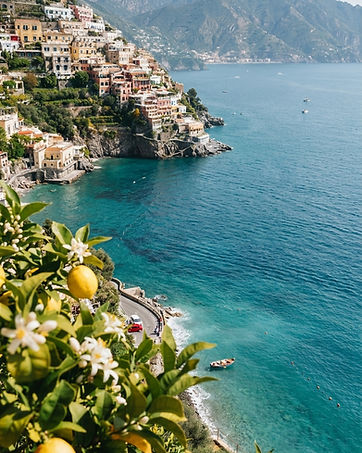
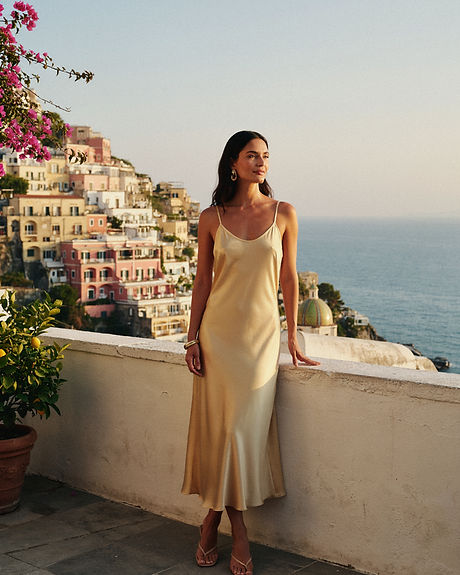
Positano wakes up slowly. The first ferries haven't arrived yet, the shutters on Via dei Mulini are still half closed, and the only sound on the steps is a delivery cart and the sea below. The dome of Santa Maria Assunta, tiled in green, yellow, and blue, is just starting to shine.
Most people see Positano from a sunbed on the main beach, and it's beautiful from there. But the town has a quieter side that most day-trippers miss: studios where you paint your own ceramics, villages in the hills where lunch takes three hours, and a cliff path with the whole coast spread out below it.
This is a slow, three-day plan for that Positano. It's for the girl who wants to come home with a hand-painted plate and a Nonna's recipe, not just a tan.
Before you go
Go in May, June, September, or early October.
The weather is warm, the sea is swimmable, and the lanes are calmer than in July and August. Much of Positano closes from November to March, so check that hotels and classes are open if you're traveling in the shoulder months.
Plan for stairs.
Positano is built straight up a cliff, and almost everything is reached by steps. Pack flat sandals with grip, like the Havaianas Slim Sandals, and save heels for dinner, if at all.
Book the special things ahead.
Classes, the best terrace tables, and boat days fill up fast in high season. Book them before you arrive, and leave the rest of the trip loose.
If this is your first time on the coast, start with what to know before your first Amalfi Coast trip for getting there, where to stay, and how the towns connect.
Day 1: Settle into the town
Start with espresso and something lemon.
Find a café with a view, order an espresso and a delizia al limone (a little sponge dome soaked in lemon cream, the coast's signature dessert), and let the town wake up around you. For more ideas on slow mornings, see how to romanticize your morning like you're in Positano.
Step inside Santa Maria Assunta.
The church with the tiled dome sits just above the main beach. Inside is a Byzantine icon of the Black Madonna, and the town's favorite legend says sailors carrying it heard a voice telling them "posa, posa" ("put it down"), which is where Positano is said to get its name. It takes ten minutes, and it's lovely and cool on a hot afternoon.
Wander Via dei Mulini.
This narrow lane, shaded by bougainvillea, is lined with linen boutiques and ceramic shops. It's also where you'll find Positano's sandal makers, who craft leather sandals to fit your feet, often while you wait. A custom pair is the most Positano souvenir there is.
Have an aperitivo at golden hour.
As the sun drops, the whole town turns peach and gold. Franco's Bar, the terrace bar at Le Sirenuse, is the classic spot for a spritz with the dome in view. Tables are mostly first come, first served and a line forms fast, so arrive early. If you'd rather skip the crowd, any terrace facing west will give you the same light.
Day 2: Make something
Paint your own ceramics in the morning.
The Amalfi Coast is famous for hand-painted majolica, with lemons, cobalt waves, and bright yellow patterns on everything from tiles to dinner plates. Vietri sul Mare, at the eastern end of the coast, is its ceramics capital, but you don't have to leave Positano to try it. At Le Ceramiche di Clò, ceramic master Claudia, who has more than 20 years of experience, leads two-hour workshops in painting, tile making, and glazing, finished with a taste of homemade limoncello. Or try the two-hour majolica class at Ceramica Assunta (book it through Inside Positano), led by artist Giovanna Parlato in a sea-view shop with up to eight people. Limoncello is included there too, and they fire your piece after class and ship it home to you.
Wear something you can get a little paint on and still feel pretty in, like this Linen Two-Piece Set. The cami top and wide-leg pants are cool, easy, and look lovely in photos against the tiles.
Walk the cliff path to Fornillo Beach.
Around midday, take the path from the main beach along the cliff, past the old watchtower, to Fornillo. It's a short walk, about ten minutes, and the beach on the other side is smaller, quieter, and more local, with a few family-run lidos and the water right there. Bring a Turkish Beach Towel with an Elastic Band, which hooks over a sunbed or a rock and stays put in the breeze.
Take a cooking class in the hills.
Above Positano, the villages of Montepertuso and Nocelle sit in terraced gardens of lemons and vegetables. The best-known class up here is at Il Ritrovo in Montepertuso, where Chef Salvatore and Marilu spend about three hours of the afternoon teaching traditional Mediterranean recipes made with local ingredients: fried zucchini flowers filled with ricotta, homemade ricotta ravioli, tagliatelle with cherry tomatoes and basil, fish with lemon, and almond cookies. Then you taste everything on the terrace with local wine and the sea below. Transfers to and from your Positano hotel are included, so there's no climb.
Come early enough to look up at the mountain behind Montepertuso, which has a hole straight through the rock. The village's name means "pierced mountain," and local legend says the Virgin Mary made the hole with her finger to defeat the devil.
Day 3: Go up high
Hike the Path of the Gods at sunrise.
The Sentiero degli Dei runs along the cliffs from Bomerano, in the hills above Amalfi, to Nocelle, with the whole coast and Capri spread out below. It usually takes two to four hours, depending on your pace. Start as early as you can: the light is soft, the path is quiet, and you'll finish before the heat.
Wear proper walking shoes and bring water, sunscreen, and a hat. Getting to Bomerano from Positano means a bus via Amalfi (or a taxi), so check the morning timetable the night before.
Have a long lunch in Nocelle.
The path ends in Nocelle, a tiny village with a church, a few cafés, and almost no traffic. Stop for a fresh-squeezed lemonade or a granita and a long lunch. From here, you can take the local bus back down to Positano, or walk the steps, which number well over a thousand. Your knees will tell you which one to choose.
Spend the afternoon at Arienzo.
Between Positano and Praiano, Arienzo Beach sits at the bottom of about 300 steps from the coast road. It faces southwest, so it keeps the sun longer than Positano's other beaches, and Arienzo Beach Club runs a shuttle boat from the main pier in Positano, which saves the stairs. Book a sunbed ahead, since it's popular, and spend the last afternoon of your trip doing absolutely nothing.
Have a last dinner with a view.
Go back to the room, shower off the salt, and put on the dress you've been saving. Positano's best terraces fill early in summer, so book your last dinner before you arrive. For where to stay, the best hotels to save on Pinterest includes Marincanto, just above the beach.
If you have a fourth day
Rent a little boat for the morning.
Small motorboats can be rented right on the main beach, and the smaller ones don't need a skipper. Go early, while the sea is glassy, and cruise along the cliffs past little coves and grottoes you can't see from town. You'll be back in time for a late breakfast.
Visit Ravello for the afternoon.
Ravello sits high above Amalfi, all quiet gardens and terraces that seem to hang over the sea. Villa Cimbrone's Terrace of Infinity is the view everyone comes for, and it's even lovelier in the late afternoon light. Take the ferry to Amalfi and the bus up the hill.
What to pack for a slow Positano trip
- Flat sandals with grip for the steps, and walking shoes for the Path of the Gods
- Linen sets and sundresses for days in town and the ceramics class (for ideas, see 6 must-have sundresses for your next Eurosummer trip)
- A swimsuit, a cover-up, and a beach towel for Fornillo and Arienzo
- One dinner dress and a light layer for the evening
- A hat, sunglasses, and sunscreen, plus a small backpack for the hike
- Room in your suitcase for a hand-painted plate, a pair of custom sandals, and a bottle of limoncello

Frequently asked questions
What is there to do in Positano besides the beach?
Plenty. Take a ceramics painting workshop, have custom sandals made on Via dei Mulini, join a cooking class in the hills above town, hike the Path of the Gods, and have an aperitivo at golden hour. The villages of Montepertuso and Nocelle are lovely for a slow lunch away from the crowds.
How many days do you need in Positano?
Three days is a beautiful amount of time for Positano itself. It gives you a day to settle in, a day for a class and a quieter beach, and a day for the Path of the Gods. Add more days if you want to visit Capri, Amalfi, or Ravello.
Can you take a ceramics class in Positano?
Yes, but book ahead. A few studios in and around Positano offer small painting workshops where you decorate your own tile or plate in the coast's traditional patterns. Ask how long firing takes and whether they ship, since most pieces aren't ready the same day.
Is the Path of the Gods hard?
It's a moderate walk with some uneven, rocky sections, and most people finish in two to four hours. Walking from Bomerano to Nocelle is mostly level or downhill. The hardest part is the long staircase from Nocelle down to Positano, which you can skip by taking the local bus.
What is the quietest beach in Positano?
Fornillo is the quieter alternative to the main beach, about ten minutes' walk along the cliff path. Arienzo, between Positano and Praiano, is quieter still, especially later in the day, though it's reached by a long staircase or a small boat from town.
When is the best time to visit Positano?
May, June, and September are ideal, with warm weather, a swimmable sea, and fewer crowds than in July and August. Early October can be beautiful too. Many hotels and restaurants close from November to March.
Here's to flour on your fingertips, sea salt in your hair, and a plate with your name painted on the bottom. Buon viaggio.